The electrification of public bus transport is progressing rapidly and makes sense for transport companies from both a technical and an operational point of view. This is the conclusion of a technology study conducted by INFRAS for the sector. The report provides a vendor-neutral overview, identifies challenges and serves as a decision-making aid for companies.
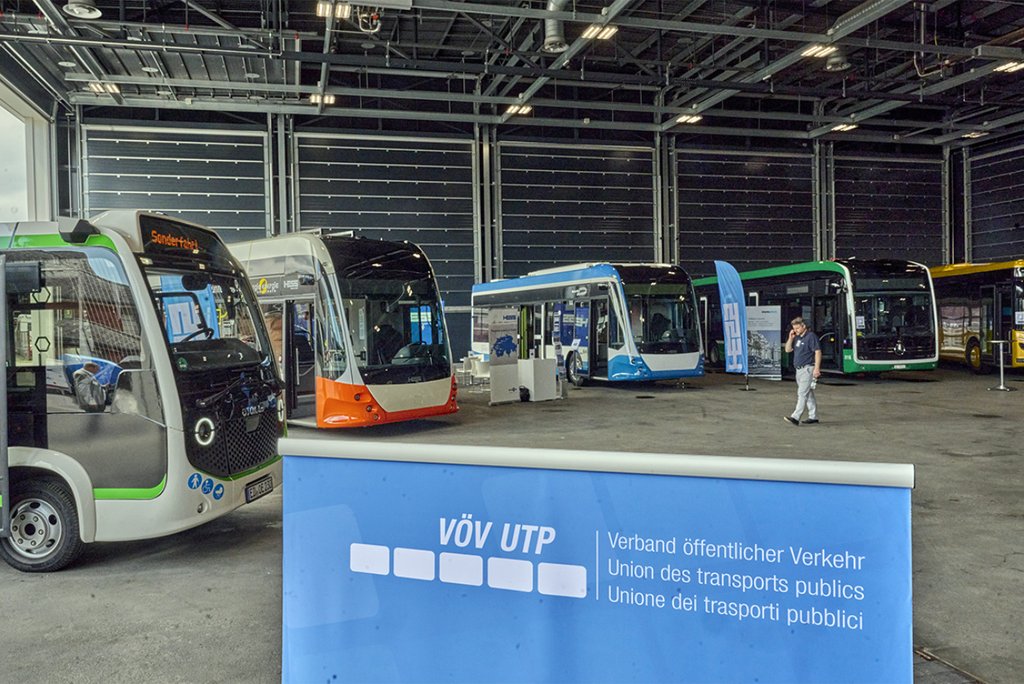
Many public transit agencies are planning to convert their fleets to fossil-free propulsion systems. However, the highly dynamic nature of technological developments and the market can be an obstacle for transport companies: they often lack a structured overview of the current state of knowledge with manufacturer-neutral principles and information.
On behalf of the Swiss Association of Public Transport (VöV), INFRAS has conducted a comprehensive analysis of current market developments, technological trends and challenges in the transition to fossil-free propulsion systems. The study also serves as a decision-making tool for the industry in the development of transition strategies.
Battery buses account for the largest share of new registrations
The electrification of bus transport is progressing rapidly in Switzerland and Europe. The study shows that 55 percent of newly registered public buses in Switzerland are already battery-powered. The proportion of the existing fleet is around 10 percent.
The proportion of battery buses among new registrations is rising steadily, while fuel cell buses and hydrogen combustion engines have not yet played a significant role in Switzerland. The availability of green hydrogen remains limited. Due to their low efficiency, hydrogen combustion engine buses are not an option for regular service.
System needed for route planning, charging times and vehicle requirements
The trend in charging concepts is dominated by depot chargers with large batteries, supplemented by combination chargers for demanding routes that can charge in the depot and on the road via a pantograph at decentralized charging stations. The importance of lithium iron phosphate (LFP) batteries continues to grow, and from 2027, a digital battery passport will contribute to transparency along the value chain.
Transitioning to electric buses places increased demands on transit agencies in terms of charging infrastructure, IT systems, and operational planning. Various strategies are discussed for electrifying demanding routes: route optimization, use of additional vehicles, decentralized charging stations, or waiting for technological advances that increase the range. The interactions between route planning, charging times, and vehicle requirements require systemic optimization.
E-bus tool allows forecasts up to 2040
For the study, INFRAS extensively evaluated current market data, manufacturer specifications, scientific publications, and empirical values from practical experience. Modeling with the INFRAS E-Bus Tool enables forecasts of cost, range and efficiency trends until 2040. Political framework conditions, subsidies and regulatory developments at EU, federal and cantonal level were also taken into account. The report is transparent about uncertainties and technological development paths.
More information (in German):
- Final Report
- VöV: Coordination Office for New Types of Bus Drives
- INFRAS dossier on e-mobility (summarised in German)
Project team