Social dynamics and climate challenges are closely intertwined. This is the conclusion of two analyses on governance and gender that INFRAS prepared for the Swiss Confederation. The analyses highlight the implications for development cooperation.
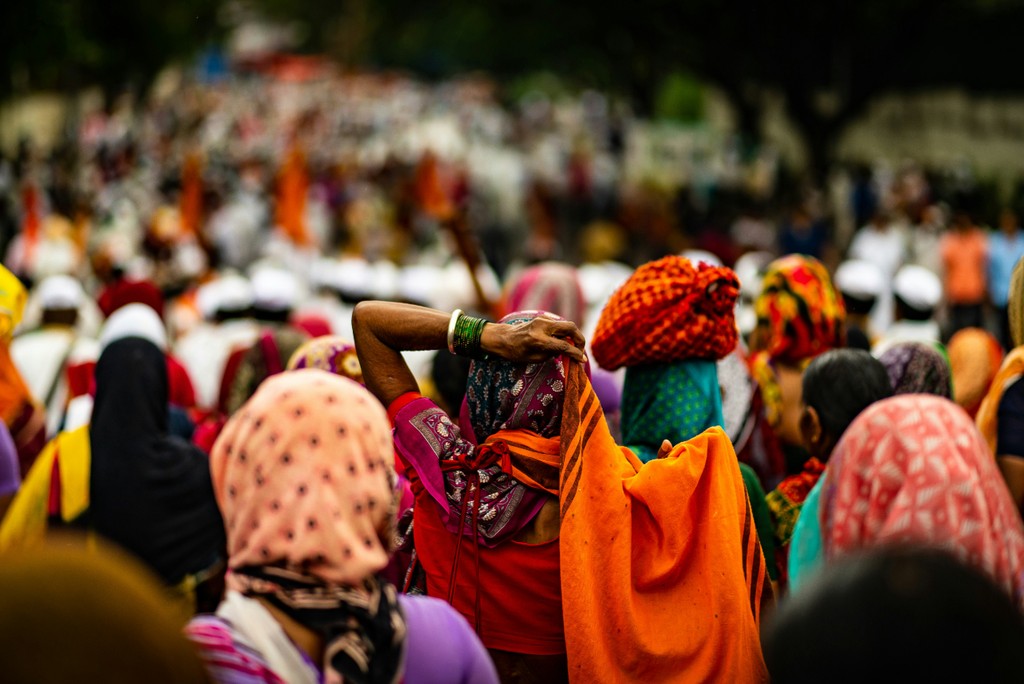
Climate change, natural hazards and environmental changes (C/D/E) cannot be considered in isolation: they interact with social structures and power relations. C/D/E risks have the potential to exacerbate existing inequalities and put pressure on a state's governance structures. These structures, in turn, influence how states, institutions and social groups (can) respond to C/D/E risks. At the same time, governance systems and gender relations shape the effectiveness of policies and the ability to secure long-term development gains.
As part of a backstopping support INFRAS has prepared two thematic integration briefs for the Climate, Disaster Risk Reduction and Environment Network of the Swiss Agency for Development and Cooperation (SDC) to highlight these linkages and to derive recommendations for development cooperation. One analysis examines the links between governance and climate and environmental policies, while the other focuses on the interplay between climate, disaster and environmental risks and gender equality.
Good governance as enabler and catalyst
Transparent and inclusive good governance systems are crucial for managing C/D/E risks and balancing conflicting interests, as the governance analysis shows. Fragile institutions, corruption risks and a lack of coordination, on the other hand, undermine the effectiveness of responses.
The brief also highlights that C/D/E challenges can undermine political stability, especially when these challenges coincide with resource scarcity and existing crises. Good governance is thus both a precondition and a catalyst for effective climate policy.
Gender inequality: Expertise often goes untapped
The study on gender equality shows that women and girls are more vulnerable to climate-related risks in many contexts—in terms of health, economic resilience, and security. At the same time, many women have specific knowledge about natural resources and local risk prevention. However, this knowledge often remains untapped.
Greater gender equality has been shown to improve the effectiveness of climate and environmental policies, strengthen resilience, and lead to more inclusive decision-making - the latter of which is directly linked to the issue of good governance.
Common conclusion: C/D/E measures require social integration
«Both policy briefs underline that technical solutions alone are not enough to ensure effective climate and environmental protection,» says Nora Schmidlin, author of the INFRAS study. «It is clear that measures to protect the climate and the environment always have societal implications.» Conversely, from a governance and gender perspective, it also makes sense to mainstream C/D/E issues in development cooperation.
According to Schmidlin, the effectiveness of interventions depends largely on how power structures, gender roles, participation opportunities, and institutional frameworks are shaped. This also provides valuable guidance for development cooperation programs that aim to effectively address climate, disaster, and environmental risks while strengthening societal resilience.
The integration briefs are available for download:
Further Information
INFRAS prepared these briefs as part of its support mandate for the Swiss Agency for Development and Cooperation's (SDC) Climate, Disaster Prevention and Environment Network (more information on the support mandate here). The C/D/E Network supports SDC units, staff and partners in taking greater account of C/D/E issues in development cooperation by, among other things, promoting the exchange of experience and disseminating best practices. Another goal is to make this knowledge accessible internationally (for more information, see also about weADAPT.)
Related articles
Project team