The energy-efficient renovation of existing buildings is a key component of Swiss energy and climate policy. The research project REFRESH, in which INFRAS participates, has been commissioned by the Swiss Federal Office of Energy (SFOE) to investigate how new policy frameworks can stimulate investments in energy-efficient renovations. The aim is to provide an evidence-based basis for future policies.
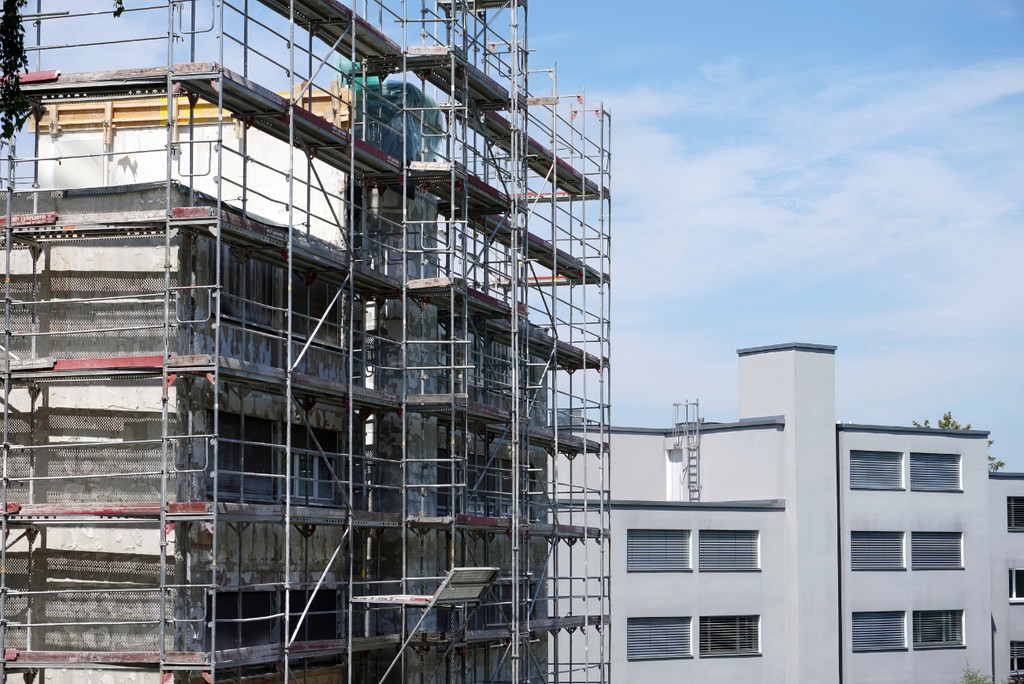
Reducing CO2emissions in the building sector is crucial to achieving national climate targets. At the same time, current trends show that renovation rates remain too low and that existing incentives are being reduced in some cases - for example, through the reduction of tax incentives following the abolition of the notional rental value, or through reduced funding budgets due to public sector austerity. In addition, there are various barriers to energy-efficient building renovation, whether economic, regulatory, technical or socio-cultural. (see the project ‘More conversions instead of new constructions’).
In this context, the REFRESH research project was launched on behalf of the Swiss Federal Office of Energy to investigate and analyze new approaches to increase the rate of building renovation.
Searching for a sound basis for decision making
The project investigates how the investment decisions of building owners can be influenced by changing framework conditions. The goal of REFRESH is to identify specific policy measures and assess their impact on investment behavior, energy consumption and emissions. The goal is to provide the federal government and the cantons with a sound basis for decision-making. To this end, the project combines various scientific methods, including a survey, expert interviews, a field experiment, and energy-economic modeling. This integrated approach makes it possible to analyze both the preferences and the actual behavior of stakeholders.
INFRAS develops policy approaches and integrates results
REFRESH is led by ZHAW and implemented in collaboration with INFRAS, UniDistance Suisse and Norm Technologies. It will run from 2026 to 2029 and is part of the Energy-Economy-Society (EES) research program. The canton of St. Gallen is also supporting the project financially. Raiffeisen Switzerland is acting as a practical partner for the field trial.
INFRAS plays a central role in the development and evaluation of policy measures. Furthermore, INFRAS coordinates the synthesis of the results from the different work packages and derives consistent recommendations for action.
Further information:
Further articles on this topic:
- Conversion instead of demolition and new construction: solutions for fewer grey emissions
- Key measures for decision makers: Successfully decarbonizing buildings in a sustainable manner
- Low Carbon and Resilient Buildings: Lessons Learned from Nearly Two Decades of Engagement
- China: Making the world's largest construction sector more sustainable
Project team